What is the Model Context Protocol (MCP)?
The new standard connecting AI agents to your tools and data
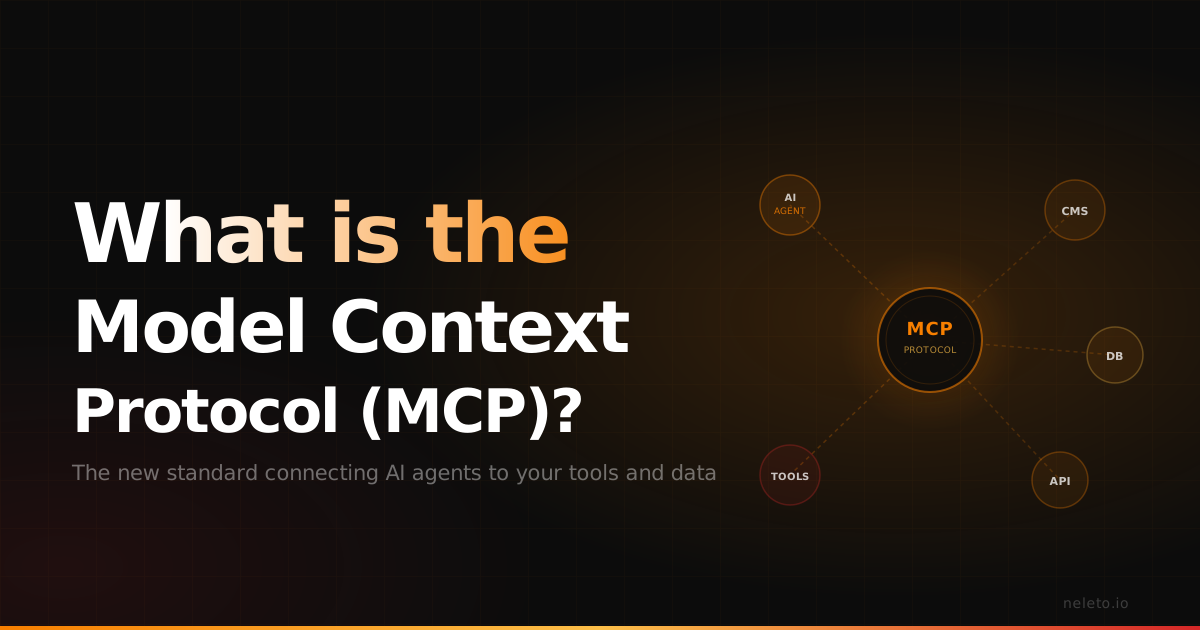
If you’ve been following the rapid evolution of AI tools in 2025 and 2026, you’ve probably heard the term MCP more and more often. But what exactly is the Model Context Protocol, and why is it becoming such a big deal for developers and content teams?
In short: MCP is the emerging universal standard that lets AI agents securely and intelligently connect to external tools, data sources, and applications.
Think of it as “USB-C for AI.”
The problem MCP solves
Before MCP, connecting AI models (like Claude, GPT, or specialized coding agents) to real-world systems was messy and fragmented. Every integration was custom-built. Want your AI to read from a database, update a CMS, or trigger a workflow? You had to write brittle, one-off code for each tool.
This created several painful problems:
- Security risks from ad-hoc integrations
- High development effort for every new connection
- Inconsistent behavior across different AI tools
- Difficulty giving AI agents reliable, up-to-date context
As AI agents became more powerful and started moving from “chatbots that answer questions” to “agents that do things,” the need for a standardized, secure communication layer became obvious.
What is MCP exactly?
The Model Context Protocol (MCP) is an open standard (originally introduced by Anthropic in late 2024) that defines how AI applications and agents can discover, connect to, and interact with external resources in a structured, secure way.
It provides a universal interface for:
- Reading and writing data
- Calling tools and functions
- Accessing contextual information
- Maintaining proper permissions and auditability
Instead of building custom integrations for every AI client, developers can now implement an MCP server once. Any MCP-compatible AI agent can then connect to it using a standardized protocol.
This dramatically simplifies things for both sides:
- AI tool makers get a reliable way to connect to external systems.
- Application developers (like CMS builders) only need to implement the protocol once to become “AI-agent ready.”
Why MCP matters for content management
Content is one of the most valuable and frequently updated assets in any organization. Being able to let trusted AI agents safely create, update, translate, or organize content opens up powerful new workflows:
- AI coding assistants that can directly update website copy while you build features
- Automated content updates based on data from other systems
- Smarter content suggestions and bulk operations with human oversight
- Reduced manual busywork for editors and marketers
However, this only works safely and reliably if the CMS exposes a proper, permission-aware interface. That’s exactly what a native MCP server provides.
Neleto’s approach to MCP
At Neleto, we believe AI should be a first-class citizen in content workflows — not an afterthought. That’s why we built native MCP server support directly into the platform.
This means:
- AI tools like Claude, Cursor, and Windsurf can connect directly to your Neleto instance
- They respect the same role-based permissions you’ve already configured
- Changes are auditable and follow normal content workflows
- You don’t need custom middleware or fragile API glue
With Neleto’s native MCP server, you can go further in practice. For example, Claude can not only create a new blog post but also upload and set a featured image, apply categories and tags, and follow your normal publishing or review workflow — all while staying strictly within the role-based permissions you’ve already configured.
We didn’t bolt MCP on later. We designed Neleto with AI agents in mind from the beginning, because we believe the future of content management is collaborative between humans and intelligent agents.
The bigger picture
MCP is still relatively new, but adoption is growing quickly across development tools, databases, and now content platforms. It's arriving just as automated agents overtake humans as the web's largest audience — and the agents reading your content increasingly speak MCP. It represents a fundamental shift in how we think about AI — moving from isolated models that only know what they were trained on, to agents that can safely act on live, permissioned data in the systems you already use.
For developers and agencies, supporting MCP is quickly becoming a competitive advantage. It future-proofs your stack and lets you offer clients more powerful, AI-augmented workflows without increasing complexity.
Ready to explore MCP in action?
If you’re curious about what agent-ready content management actually feels like, Neleto gives you a clean, production-ready way to experience it today.
You can start for free and connect your favorite AI coding tools directly to your content. No custom integration work required.
The age of AI agents that can meaningfully help manage websites isn’t coming — it’s already here. MCP is the standard making it practical and safe.
Read next
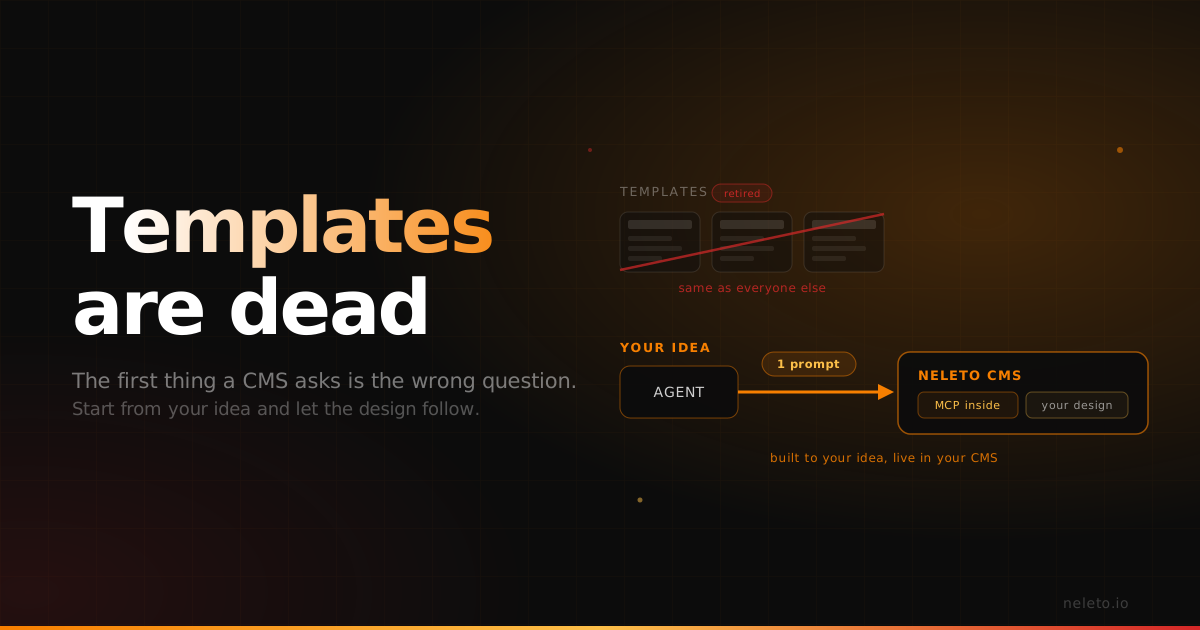
Templates Are Dead
Every CMS starts by asking you to pick a template. Now that AI generates real designs and a native MCP server places them straight into your CMS, you can start from your own idea instead of someone else's theme.
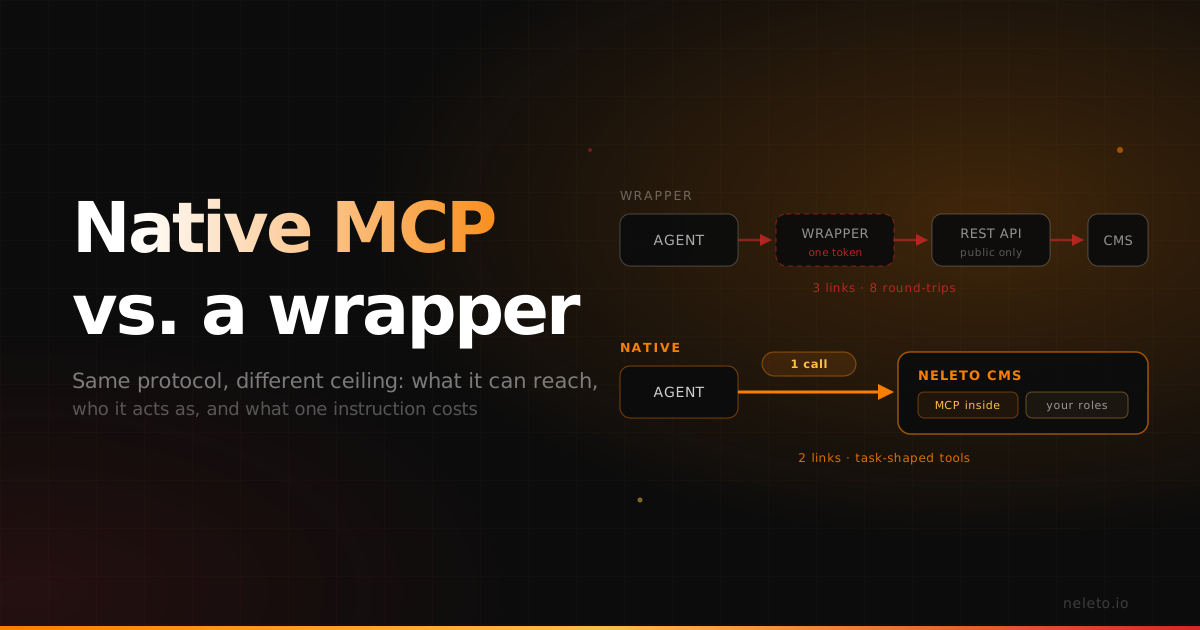
Native MCP vs an MCP Wrapper: Why the Difference Shows Up in Production
Both speak the same protocol. The gap opens in what they can reach, who they act as, and how many round-trips one instruction costs.
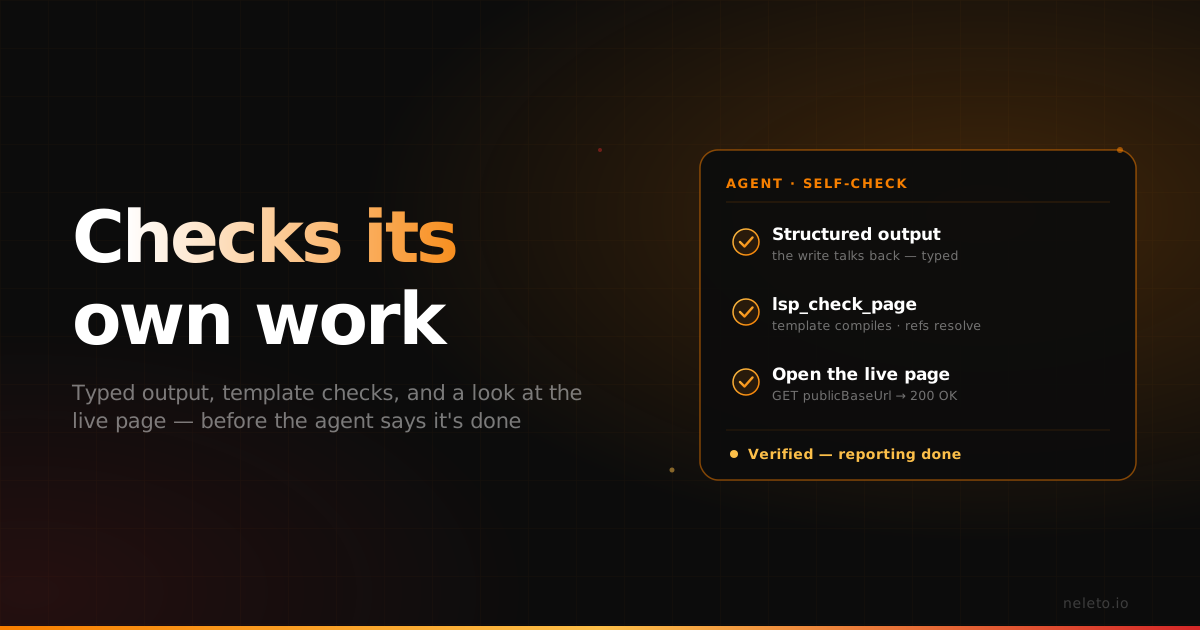
The AI That Checks Its Own Work
Most AI-plus-CMS setups write content and hope it rendered. Neleto checks three ways: structured output, LSP checks and a look at the live page.