Connect Neleto to Anything: The Native MCP Server and Connector Ecosystem
Your CMS shouldn't be an island. Here's how Claude, Cursor, and Windsurf talk to your content directly — and where it goes next.
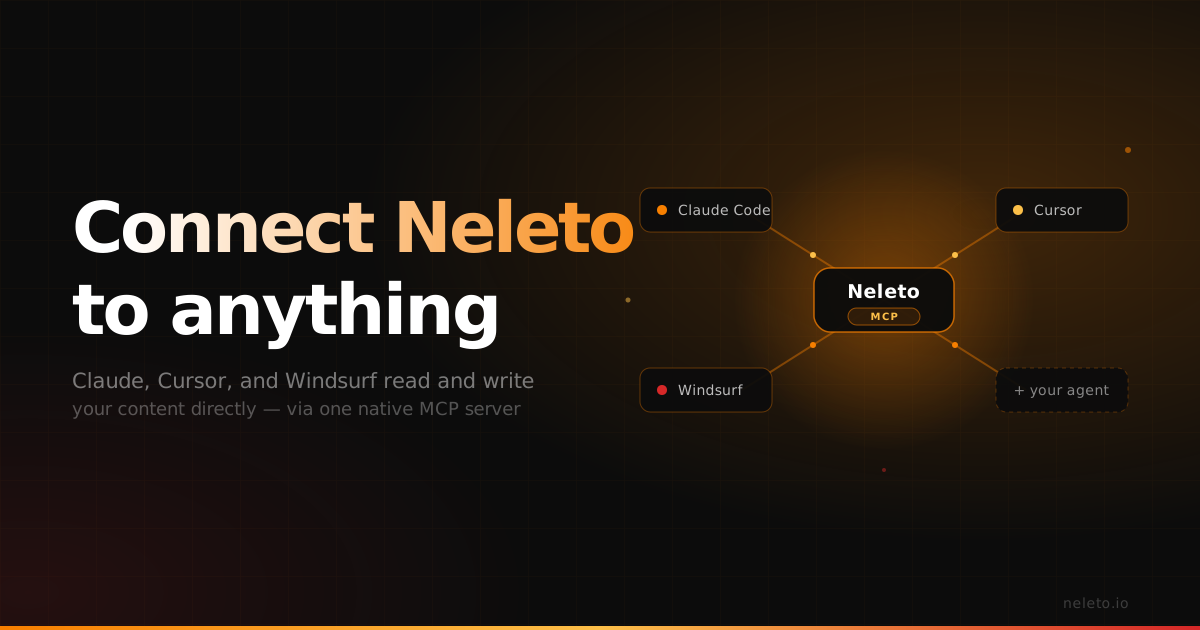
Most content tools make you leave them to get anything done. You export, you paste, you wire up a middleman, you babysit a sync. Neleto goes the other way: the CMS itself speaks the protocol your AI tools already speak, so the content lives in one place and the work comes to it.
That protocol is MCP — the Model Context Protocol — and it's built into Neleto natively. Not a plugin, not a community wrapper around a REST API, not something you stand up on the side. When you point Claude Code, Cursor, or Windsurf at your Neleto instance, they can read and write your pages, posts, events, translations, and files directly, while respecting the roles and permissions you already set. Your AI workflow and your CMS, finally connected.
What "native" actually buys you
There are a lot of CMS-plus-MCP stories floating around right now, and most of them are a thin shim someone bolted onto an existing API. That works until it doesn't: the tool surface is narrow, the auth is awkward, nobody officially maintains it, and the moment the underlying API shifts, your agent breaks. We've unpacked how native servers and wrappers differ in production in its own post.
Native means Neleto exposes its own content model as first-class tools. An agent doesn't have to guess at your schema or reverse-engineer endpoints — it sees pages, blog posts, events, components, layouts, redirects, and translations as things it can actually operate on. "Create a draft," "publish this," "add a translation," "fix these redirects" — real operations, with your permissions enforced on every one. That's the difference between a demo and something you'd trust on a client site.
What this looks like on a Tuesday
Say a client emails you five new team-member bios and wants them live by end of day. In a normal CMS that's twenty minutes of clicking through forms. With Neleto you hand the email to Claude Code, tell it to create the pages, and it does — using the component you already built, in the language you already run, as drafts you review before anything goes public.
Or you're migrating a stubborn old site. You point your agent at the source, let it read the structure, and have it scaffold the content types with real sample data in Neleto so you can see the shape before you commit. Field mapping and taxonomy alignment — the tedious part — becomes a conversation instead of a spreadsheet. (We wrote up a full WordPress migration start to finish if you want the honest version.)
None of this needs a separate frontend, a second deployment pipeline, or a webhook you have to build and maintain. Everything a full site needs is already inside Neleto; MCP just lets an agent drive it.
Why we're leaning into connectors
MCP turned out to be the thing people actually want to talk about — it's consistently our most-read, most-shared content, and it's where the industry is heading. Through 2026, MCP has moved from a developer curiosity to production infrastructure: tens of thousands of public servers, adoption across every major AI tool, and a growing expectation that serious platforms speak it out of the box.
So the roadmap follows the demand. The native server is the foundation; connectors are the next floor. The goal is simple to say and a lot of work to earn: your Neleto content should be reachable from wherever your team already works, through agents you already trust, without you gluing services together by hand.
The honest status
The native MCP server is live and real — Claude Code, Cursor, and Windsurf work against it today, and it's one of the first things I'd want you to try. The broader connector ecosystem is being built in the open, the same way everything here is. If you're doing something with the MCP server we didn't anticipate, that's exactly the feedback that shapes what ships next — tell me about it.
Spin up a free instance at console.neleto.io, connect your agent to the MCP server, and let it write your first page. That moment — watching your CMS fill itself in from a prompt — is the whole pitch. You just have to see it once.
— Martin
Read next
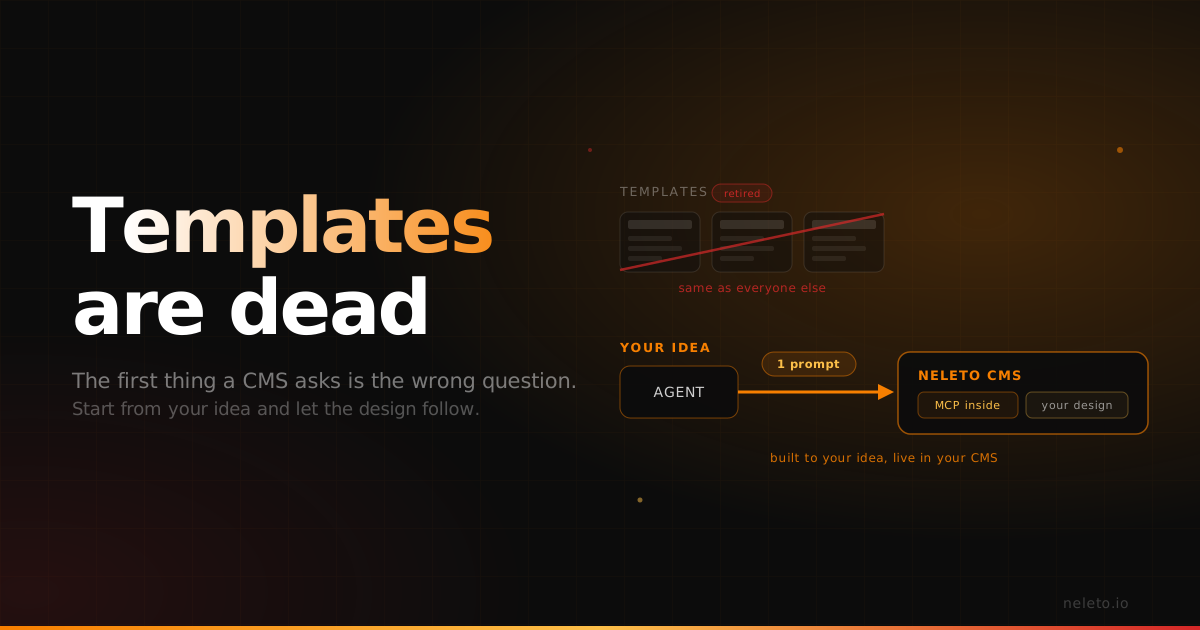
Templates Are Dead
Every CMS starts by asking you to pick a template. Now that AI generates real designs and a native MCP server places them straight into your CMS, you can start from your own idea instead of someone else's theme.
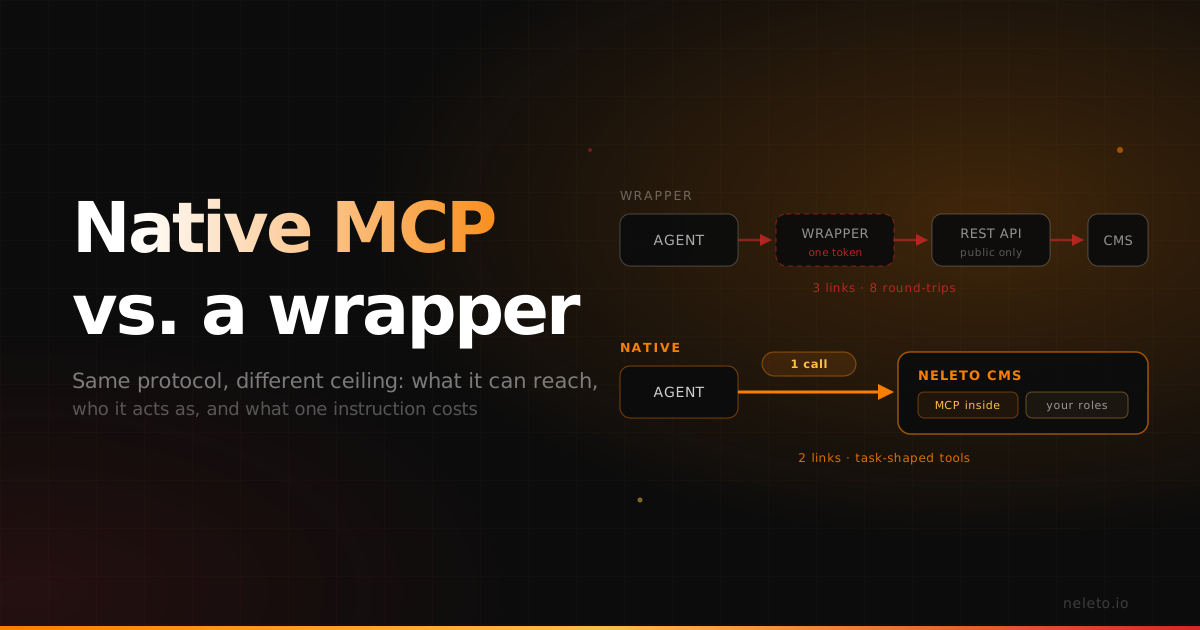
Native MCP vs an MCP Wrapper: Why the Difference Shows Up in Production
Both speak the same protocol. The gap opens in what they can reach, who they act as, and how many round-trips one instruction costs.
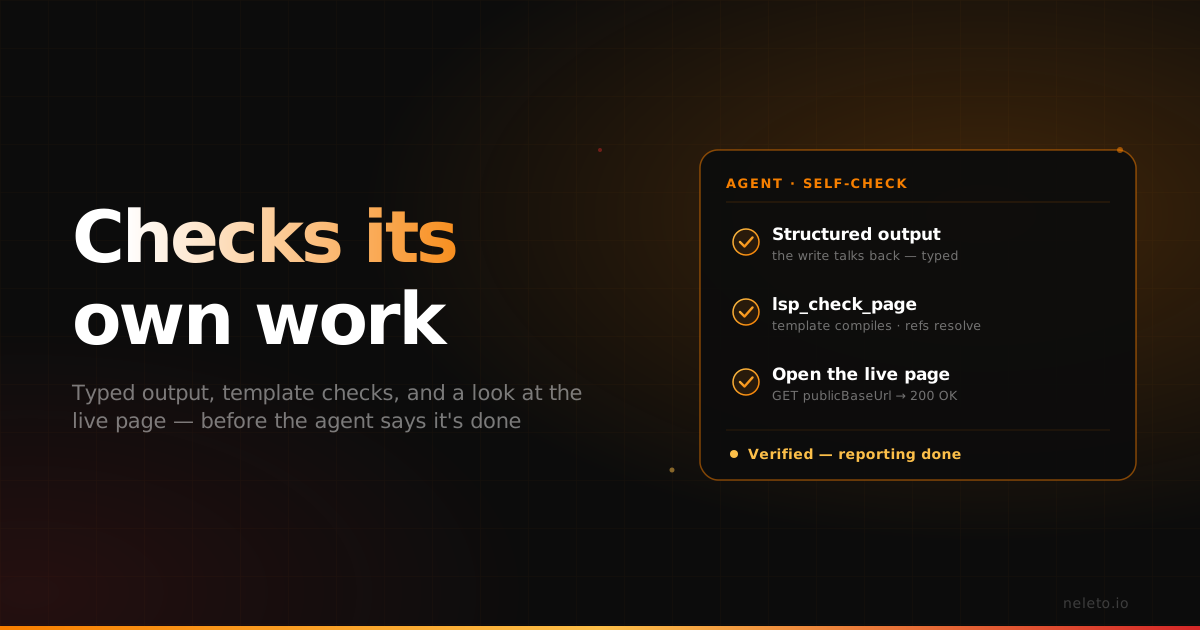
The AI That Checks Its Own Work
Most AI-plus-CMS setups write content and hope it rendered. Neleto checks three ways: structured output, LSP checks and a look at the live page.